Laboratory managers face one of their most challenging decisions when analytical equipment begins showing signs of wear or failure. The decision between repairing existing instruments and investing in replacement equipment can significantly affect operational efficiency and budget allocation. At Aim Analytical, we’ve spent years helping laboratories navigate this complex decision-making process from our Littleton, Colorado, facility.
Our unique perspective as both refurbishment specialists and equipment suppliers gives us unparalleled insight into when to repair and when to replace analytical equipment. Through our extensive work with chromatography instruments and laboratory equipment, we’ve developed comprehensive frameworks that help laboratory managers make informed decisions based on multiple critical factors.
The repair-versus-replacement equation isn’t simply about immediate costs. It involves careful consideration of equipment age, performance degradation patterns, operational requirements, and long-term financial implications. Our experience with maintaining HPLC, GC, GC/MS, LC/MS QQQ, and ICPMS systems has taught us that each instrument type has unique characteristics that influence the optimal timing for repair or replacement decisions.
Understanding Equipment Lifecycle Fundamentals
Every analytical instrument follows a predictable lifecycle pattern that influences repair and replacement decisions. During the early years, equipment typically operates at peak performance with minimal maintenance requirements. However, as instruments age, they enter phases where repair frequency increases and performance may begin to decline.
We’ve observed that most analytical equipment experiences its first major decision point around the 7-10 year mark, depending on usage intensity and maintenance history. At this stage, laboratories often encounter their first significant repair costs, prompting an evaluation of the long-term equipment strategy.
The key to making optimal decisions lies in understanding where your equipment sits within its lifecycle curve. Instruments in their middle years may benefit from strategic repairs that extend useful life, while older systems might represent better candidates for replacement despite seemingly reasonable repair costs.
Critical Factors in the Repair vs. Replace Decision
Equipment Age and Manufacturer Support
Age represents one of the most fundamental factors in determining when a lab should replace analytical equipment. However, chronological age alone doesn’t tell the complete story. We consider both the instrument’s age and the manufacturer’s continued support availability.
Most manufacturers provide parts and service support for 10-15 years after discontinuation. Once equipment approaches or exceeds this threshold, replacement parts become increasingly scarce and expensive. We’ve seen laboratories face repair delays of several weeks simply because critical components were no longer readily available.
Additionally, older equipment often lacks compatibility with modern software systems and data management requirements. This incompatibility can create operational inefficiencies that extend beyond the instrument itself, affecting overall laboratory productivity.
Performance Degradation Indicators
Performance degradation rarely occurs suddenly. Instead, it typically manifests through gradual changes in key metrics that careful monitoring can detect. We track several performance indicators that signal when equipment evaluation becomes necessary:
Baseline stability represents one of the earliest indicators of potential problems. Instruments showing increased baseline noise or drift often require attention before complete failure occurs. Similarly, decreased sensitivity or resolution can indicate worn components that may benefit from repair or suggest the need for replacement.
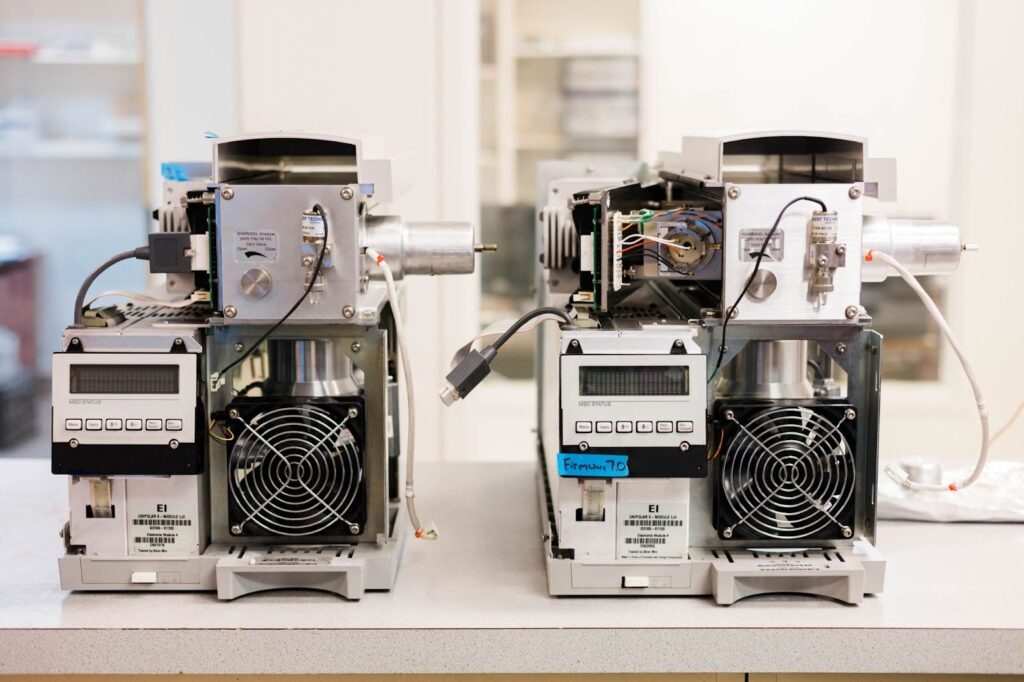
Reproducibility issues often emerge as equipment ages, manifesting through increased standard deviation in repeated measurements. When these issues persist despite routine maintenance and calibration, they typically indicate underlying hardware problems that require evaluation.
Cost-Benefit Analysis Framework
When a lab should repair analytical equipment depends heavily on a comprehensive cost analysis that extends beyond immediate repair expenses. We recommend evaluating both direct and indirect costs associated with each option.
Direct repair costs include parts, labor, and any required service downtime. However, indirect costs often prove more significant. These include lost productivity during extended repair periods, potential sample re-analysis costs if performance remains suboptimal, and the opportunity cost of staff time spent managing problematic equipment.
Replacement costs must include not only the instrument purchase price but also installation, training, method validation, and any required facility modifications. However, replacement often provides benefits including improved performance, enhanced capabilities, and reduced ongoing maintenance requirements.
Decision Matrix for Common Analytical Instruments
Different instrument types require tailored approaches to repair-versus-replacement decisions. Our experience with various analytical systems has revealed patterns that help guide these critical choices.
| Instrument Type | Typical Lifespan | Key Wear Components | Critical Decision Factors |
| GC Systems | 10-15 years | Injector seals, columns, detectors | Sample throughput, method requirements |
| GC/MS | 8-12 years | Ion source, vacuum pumps, mass analyzer | Mass accuracy, sensitivity needs |
| HPLC | 12-18 years | Pumps, valves, detectors | Pressure capability, gradient performance |
| LC/MS QQQ | 8-12 years | Ion source, collision cell, pumps | Sensitivity, method complexity |
| ICPMS | 10-15 years | Ion source, interface cones, detector | Detection limits, sample matrix |
Gas Chromatography Systems
GC instruments often make excellent repair candidates due to their relatively simple design and readily available components. We frequently recommend repairs for GC systems under 12 years old when major components, such as injectors or detectors, require service.
However, replacement becomes more attractive when multiple major components require simultaneous attention, or when laboratories require enhanced capabilities such as faster temperature programming or improved automation.
Mass Spectrometry Systems
Mass spectrometry instruments present more complex repair-versus-replacement decisions due to their sophisticated components and higher service costs. The ion source and vacuum system represent critical components that significantly impact performance.
When these major components require replacement, the total repair cost often approaches 40-50% of replacement equipment value. At this point, replacement typically provides better long-term value, especially considering the performance improvements available in newer systems.
Financial Analysis Tools and Calculations
Proper financial analysis requires examining costs over the equipment’s remaining useful life rather than focusing solely on immediate expenses. We use several calculation methods to help laboratories make informed decisions.
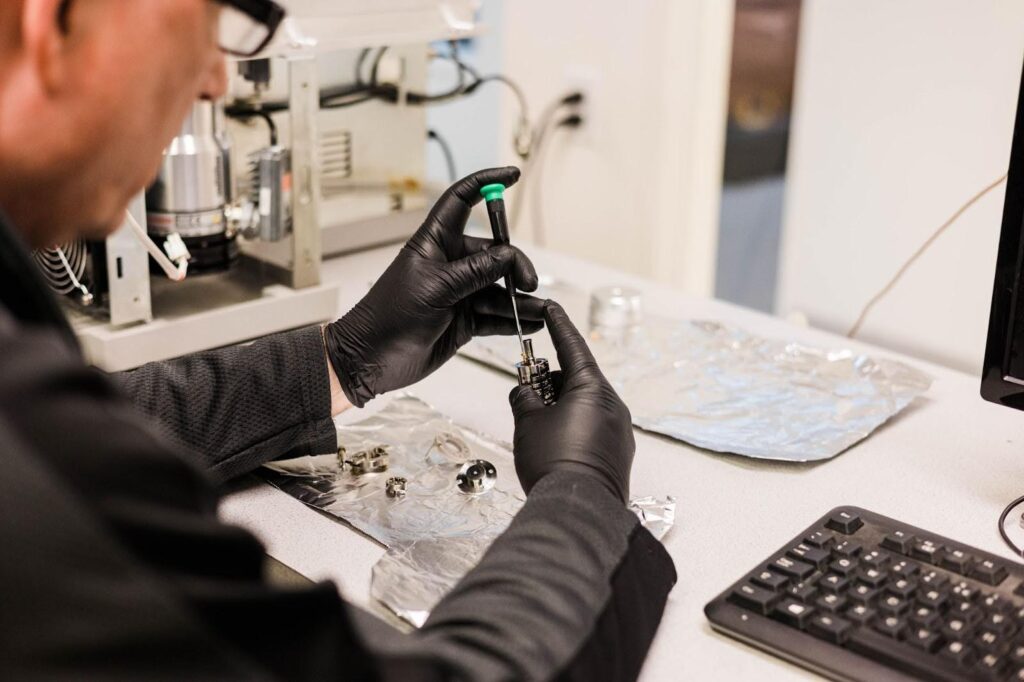
The total cost of ownership (TCO) model provides the most comprehensive analysis by including purchase price, maintenance costs, operating expenses, and productivity impacts over the equipment’s expected lifespan. This approach often reveals that seemingly expensive replacements actually provide better long-term value.
We also calculate the repair cost threshold, which represents the percentage of replacement cost that justifies equipment replacement. Generally, when repair costs exceed 60-70% of replacement value, replacement becomes the preferred option.
Lifecycle Cost Comparison
| Cost Category | Repair Option | Replace Option |
| Immediate Investment | Repair cost only | Full replacement cost |
| Annual Maintenance | Higher (aging equipment) | Lower (warranty period) |
| Downtime Risk | Higher probability | Significantly reduced |
| Performance Level | Restored to previous | Latest technology |
| Useful Life Extension | 2-4 years typical | 10-15 years full lifecycle |
Performance Standards and Operational Requirements
Laboratory accreditation and regulatory requirements often influence repair-versus-replacement decisions. Instruments that do not meet the required performance specifications may need to be replaced, regardless of repair costs.
We regularly encounter situations in which older equipment, even after successful repairs, cannot achieve the precision, accuracy, or detection limits required by specific analytical methods. In pharmaceutical and environmental laboratories, these performance requirements are non-negotiable.
Method validation represents another crucial consideration. Significant equipment changes, whether through major repairs or replacement, often trigger method revalidation requirements. The cost and time associated with revalidation must be factored into the decision-making process.
Strategic Planning for Equipment Replacement
Successful laboratory management requires proactive equipment planning rather than reactive decision-making. We recommend developing replacement schedules based on equipment age, usage patterns, and anticipated performance requirements.
This strategic approach allows laboratories to:
1. Budget appropriately for upcoming equipment needs
2. Schedule replacements during planned downtime periods
3. Negotiate better pricing through advance planning
4. Minimize operational disruption through coordinated transitions
5. Maintain analytical capabilities without emergency decisions
Creating a Replacement Timeline
Equipment replacement planning should begin years before replacement becomes necessary. We suggest starting evaluation processes when instruments reach 60-70% of their expected useful life, allowing adequate time for budget planning and vendor selection.
This timeline also permits strategic decisions about interim repairs that might extend equipment life until planned replacement dates. Sometimes a moderate repair investment makes sense when replacement is planned within 12-18 months.
Quality Assurance and Regulatory Considerations
Regulatory compliance requirements significantly influence repair-versus-replacement decisions in many laboratory environments. FDA-regulated laboratories, for example, must maintain detailed documentation of equipment changes and their impact on analytical methods.
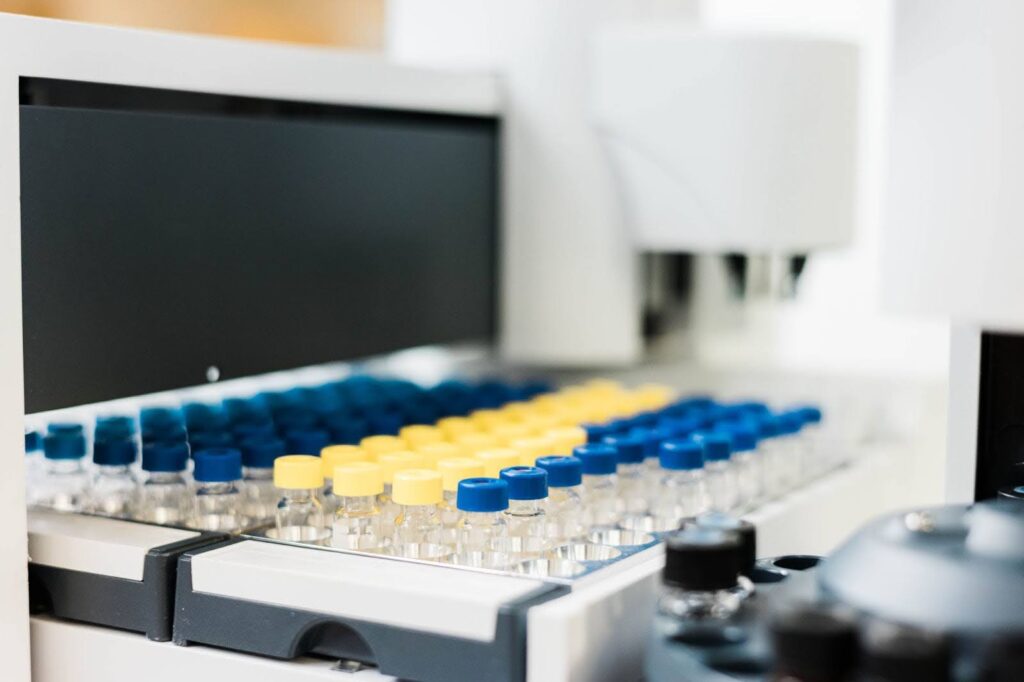
Older equipment may lack the data-integrity features required by modern regulations, such as 21 CFR Part 11. In these cases, replacement might be necessary regardless of the equipment’s physical condition or repair costs.
We’ve observed that laboratories often underestimate the compliance costs associated with maintaining older equipment. These hidden costs include additional documentation requirements, more frequent calibration needs, and increased validation activities.
Making the Final Decision
The repair-versus-replacement decision ultimately requires balancing multiple factors specific to each laboratory’s situation. We recommend using a structured evaluation process that considers:
- Equipment age and condition assessment
- Comprehensive cost analysis, including hidden expenses
- Performance requirements and regulatory compliance needs
- Strategic timing and operational impact
- Available budget and financing options
Our experience shows that laboratories making decisions based solely on immediate costs often regret their choices within 12-18 months. The most successful decisions consider long-term implications and strategic laboratory objectives.
Common Decision-Making Mistakes
Many laboratories make predictable mistakes when evaluating when to repair and when to replace analytical equipment. The most common error involves focusing exclusively on upfront costs without considering total ownership expenses.
Another frequent mistake is delaying decisions until equipment failure forces emergency action. This reactive approach typically results in higher costs, operational disruption, and suboptimal equipment choices made under time pressure.
We also see laboratories making repair investments in equipment that lacks long-term viability. While individual repairs might seem cost-effective, multiple repairs on aging equipment often exceed replacement costs when evaluated over time.
Technology Evolution Impact
Rapid advancement in analytical technology influences replacement timing decisions. Newer instruments often provide significant performance improvements, enhanced automation, and better data management capabilities.
These technological advances can provide competitive advantages that justify replacement even when existing equipment remains functional. Improved sensitivity, faster analysis times, and enhanced automation can increase laboratory throughput and reduce operating costs.
However, laboratories must balance technological benefits against implementation costs and method validation requirements. Not every technological improvement justifies immediate replacement, especially when existing equipment meets current performance needs.
Make Informed Equipment Decisions with Expert Guidance
Determining when to repair or replace analytical equipment requires expertise gained from years of hands-on experience in instrument evaluation and lifecycle management. At Aim Analytical, our dual perspective as both refurbishment specialists and equipment suppliers provides unique insights that help laboratories make optimal decisions.
Our rigorous testing and refurbishment processes at our Littleton, Colorado, facility give us intimate knowledge of equipment failure patterns and performance restoration capabilities. This expertise enables us to provide accurate assessments of whether repair or replacement represents the best value for your specific situation.
Don’t let equipment decisions impact your laboratory’s productivity and budget.Request a quote today to discuss your analytical equipment needs with our experienced team and develop a strategic approach to your instrument lifecycle management.