The landscape of analytical testing has undergone a dramatic transformation in recent years. What once required teams of technicians working around the clock can now be accomplished with precision, speed, and consistency through laboratory automation in analytical testing.
This shift isn’t just about replacing human hands with robotic ones – it’s about fundamentally reimagining how laboratories operate, process samples, and generate reliable data.
Modern laboratories face increasing pressure to deliver faster results, handle larger sample volumes, and maintain stringent quality standards while managing tight budgets.
Traditional manual processes simply can’t keep pace with these demands. The solution lies in embracing automation in analytical laboratories, combining sophisticated instrumentation with intelligent workflow management systems.
The Core Technologies Driving Laboratory Automation
At the heart of every automated analytical laboratory are several key technologies that work together to create seamless, efficient workflows. Understanding these components helps laboratory managers make informed decisions about their automation journey.
Robotic sample handling systems represent one of the most visible aspects of laboratory automation. These systems can move samples between different stations, prepare dilutions, and manage sample storage with incredible precision. Unlike human technicians, robotic handlers never tire, never make calculation errors, and can work continuously without breaks.
Automated injection systems have revolutionized how samples are introduced into analytical instruments. Modern GC and HPLC systems feature sophisticated autosamplers that can handle hundreds of samples in sequence, adjusting injection volumes, managing wash cycles, and even switching between different analytical methods automatically.
Laboratory Information Management Systems (LIMS) serve as the digital brain of automated laboratories. These platforms coordinate all aspects of sample tracking, method selection, data collection, and results reporting. When properly integrated, LIMS platforms can trigger automated workflows based on sample types, client requirements, or regulatory protocols.
The integration of these technologies creates what we call “smart laboratories” – facilities where samples move automatically through complex analytical sequences with minimal human intervention.
Key Benefits of Laboratory Automation
The advantages of implementing laboratory automation in analytical testing extend far beyond simple efficiency gains. We’ve observed how automated systems transform every aspect of laboratory operations.
Enhanced throughput is the top benefit for most laboratories. Automated systems can process samples 24 hours a day, seven days a week. While a human technician might handle 50-100 samples per day, an automated system can easily process 300-500 samples in the same timeframe, depending on the analytical requirements.
Improved data quality results from the consistent, repeatable nature of automated processes. Human error – whether from fatigue, miscalculation, or simple oversight – becomes virtually eliminated. Every sample receives identical treatment, leading to more reliable and defensible results.
Reduced operating costs emerge as laboratories decrease their dependence on skilled technicians for routine tasks. Staff can focus on method development, troubleshooting, and data interpretation rather than repetitive sample preparation and injection procedures.
Better regulatory compliance becomes achievable through automated documentation and standardized procedures. Every step in an automated workflow can be logged, tracked, and verified, creating comprehensive audit trails that satisfy even the most stringent regulatory requirements.
Increased safety for laboratory personnel occurs when automation handles hazardous materials, reduces exposure to toxic solvents, and minimizes the risk of accidents associated with repetitive manual tasks.
| Benefit Category | Manual Operations | Automated Operations |
| Daily Sample Throughput | 50-100 samples | 300-500 samples |
| Error Rate | 2-5% typical | <0.5% typical |
| Operating Hours | 8-10 hours/day | 24 hours/day |
| Documentation Effort | High manual effort | Automatic generation |
| Staff Safety Risk | Moderate to high | Significantly reduced |
Essential Automated Analytical Instruments
The backbone of any automated analytical laboratory comprises sophisticated instruments that work seamlessly with automation platforms. Each type of instrument brings unique capabilities to automated workflows.
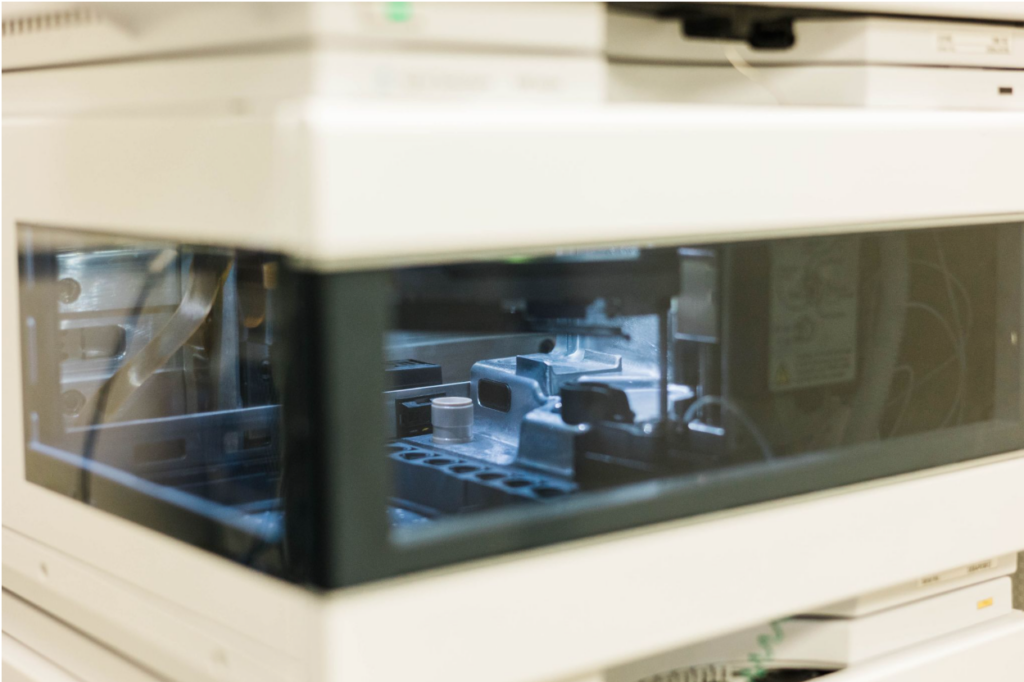
Gas Chromatography Mass Spectrometry (GC/MS) systems excel in automated analysis of volatile and semi-volatile compounds. Modern GC/MS instruments feature advanced autosamplers, automatic method switching, and sophisticated data processing capabilities, making them ideal for high-throughput environmental, food safety, and pharmaceutical applications.
High-Performance Liquid Chromatography (HPLC) systems handle non-volatile compounds that can’t be analyzed by GC. Automated HPLC systems can switch between multiple mobile phases, automatically adjust flow rates and gradients, and process complex sample matrices with minimal intervention.
Liquid Chromatography Mass Spectrometry (LC/MS) platforms combine the separation power of HPLC with the identification capabilities of mass spectrometry. Triple quadrupole (QQQ) systems particularly excel in quantitative analysis, making them essential for pharmaceutical, clinical, and environmental laboratories.
Inductively Coupled Plasma Mass Spectrometry (ICPMS) instruments provide unmatched sensitivity for elemental analysis. Modern ICPMS systems feature automated sample introduction, collision cell technology, and sophisticated interference-correction algorithms that enable reliable trace-element analysis in complex matrices.
At Aim Analytical, we understand that each instrument type requires specific automation capabilities. Our refurbishment process focuses on the critical components that enable seamless integration with automated workflows.
Implementation Strategies for Laboratory Automation
Successfully implementing automation in analytical laboratories requires careful planning and strategic thinking. We’ve learned that the most successful automation projects follow a systematic approach.
Here are the key steps for successful automation implementation:
1. Assessment of Current Workflows – Document existing processes, identify bottlenecks, and quantify current throughput and error rates
2. Define Automation Goals – Establish clear, measurable objectives for what automation should accomplish
3. Technology Selection – Choose instruments and automation platforms that align with specific analytical requirements
4. Staff Training and Change Management – Prepare teams for new workflows and provide comprehensive training on automated systems
5. Phased Implementation – Start with pilot projects before scaling to full laboratory automation
6. Continuous Optimization – Monitor performance metrics and continuously refine automated processes
The most critical factor in successful automation implementation is selecting instrumentation that can reliably integrate with automated systems. This is where the quality and reliability of analytical instruments become paramount.
Overcoming Common Automation Challenges
Every laboratory considering automation faces similar challenges. Understanding these obstacles and their solutions helps ensure successful implementation.
Budget constraints represent the most common barrier to automation adoption. New automated analytical instruments can cost hundreds of thousands of dollars, putting comprehensive automation out of reach for many laboratories. This challenge has driven increased interest in high-quality refurbished automated instrumentation that provides the same capabilities at a fraction of the cost.
Integration complexity arises when connecting different instruments, software platforms, and automation components. Success requires instruments with robust communication protocols and software interfaces designed for automation environments.
Staff resistance to change can slow or derail automation projects. The key is demonstrating how automation enhances rather than replaces human expertise, allowing skilled technicians to focus on more valuable analytical challenges.
Validation and regulatory compliance concerns affect laboratories in regulated industries. Automated systems must meet the same validation requirements as manual processes, requiring comprehensive documentation and testing protocols.
| Challenge | Traditional Solution | Aim Analytical Approach |
| High Equipment Costs | Delay automation projects | Provide cost-effective refurbished instruments |
| Integration Issues | Expensive custom solutions | Pre-tested automation compatibility |
| Validation Requirements | Lengthy internal testing | Comprehensive refurbishment documentation |
| Staff Training Needs | External training programs | Application support and guidance |
The Role of Refurbished Automated Instrumentation
Quality refurbished automated analytical instruments have emerged as a game-changing solution for laboratories seeking to implement automation without the need for massive capital investments. The key lies in understanding what makes refurbished instrumentation suitable for automated applications.
At Aim Analytical, we’ve developed comprehensive refurbishment processes tailored to the unique requirements of automated analytical systems. Every instrument in our inventory undergoes rigorous testing to ensure compatibility with automated workflows and meets manufacturer specifications essential for consistent automated operation.
Precision injection systems receive particular attention during our refurbishment process. These components must maintain exceptional accuracy and precision over thousands of injection cycles. We replace wear components, calibrate all systems, and test injection repeatability to ensure reliable automated operation.
Automated sample changers undergo complete mechanical and electronic refurbishment. These systems must move samples reliably without jamming, maintain proper temperature control, and communicate effectively with instrument control software.
Software interfaces that enable communication with laboratory automation platforms receive comprehensive testing and updates. Modern automated laboratories depend on seamless data flow between instruments, LIMS systems, and automation controllers.
Our approach to refurbishing automated analytical instrumentation goes beyond simple repair and cleaning. We specifically address the critical components that enable laboratory automation in analytical testing, ensuring that every instrument can integrate seamlessly with modern automation platforms.
Instrument-Specific Automation Capabilities
Different types of analytical instruments bring unique automation capabilities to laboratory workflows. Understanding these specific strengths helps laboratories design optimal automated systems.
GC and GC/MS systems excel in automated volatile analysis workflows. Modern instruments feature:
- Large-capacity autosamplers that can handle up to 150 samples
- Automatic method switching based on sample type or client requirements
- Real-time monitoring and automatic adjustments for optimal performance
- Direct integration with LIMS platforms for complete sample tracking
HPLC systems provide exceptional flexibility for automated liquid-based analysis:
- Multiple mobile phase reservoirs for complex gradient programs
- Column switching capabilities for different analytical methods
- Automated equilibration and cleaning procedures
- Temperature-controlled sample storage and injection
LC/MS QQQ instruments offer the ultimate in automated quantitative analysis:
- Sophisticated data processing algorithms that automatically integrate peaks and calculate concentrations
- Multiple reaction monitoring (MRM) capabilities for simultaneous multi-analyte analysis
- Automated tuning and calibration procedures
- Real-time quality control monitoring
ICPMS systems provide unmatched automated elemental analysis capabilities:
- Automated sample introduction with collision cell optimization
- Multi-element analysis with automatic interference correction
- Internal standard addition and monitoring
- Automated cleaning and maintenance procedures
Each instrument type requires specific expertise to ensure optimal automated performance. Our team at Aim Analytical brings decades of experience in preparing these instruments for automated applications.
Future Trends in Laboratory Automation
The evolution of automation in analytical laboratories continues at a rapid pace. Understanding emerging trends helps laboratories make strategic decisions about their automation investments.
Artificial intelligence and machine learning are beginning to transform how automated systems operate. Smart algorithms can optimize analytical conditions in real-time, predict instrument maintenance needs, and even identify potential quality issues before they affect results.
Cloud-based laboratory management systems enable remote monitoring and control of automated instruments. Laboratory managers can track progress, review results, and troubleshoot issues from anywhere with an internet connection.
Miniaturization and microfluidics technologies promise to reduce sample and reagent consumption while increasing analytical speed. These advances will enable even higher throughput automated systems.
Enhanced connectivity and data integration continue to improve. Modern instruments generate vast amounts of data that must be processed, stored, and analyzed efficiently. Advanced data management systems will become increasingly important.
The laboratories that succeed in this evolving landscape will be those that invest in flexible, upgradeable automation platforms built on reliable, high-quality analytical instruments.
Building Cost-Effective Automation Solutions
Creating effective automated analytical laboratories doesn’t require unlimited budgets. Strategic approaches to automation can deliver substantial benefits while maintaining financial responsibility.

Phased implementation strategies allow laboratories to automate incrementally, proving value at each step before expanding to additional capabilities. Starting with the highest-impact applications demonstrates ROI and builds organizational confidence in automation.
Hybrid manual-automated workflows can provide many automation benefits while preserving flexibility for unusual or low-volume samples. Not every sample needs full automation – smart laboratories design workflows that automatically route samples to appropriate processing paths.
Leveraging quality refurbished instrumentation enables laboratories to access advanced automation capabilities without the capital requirements of new equipment purchases. The key is partnering with suppliers who understand automation requirements and refurbish instruments specifically for automated applications.
The following automated instrumentation typically provides the highest ROI for laboratories beginning their automation journey:
- GC/MS systems for environmental and food safety laboratories processing large volumes of routine samples
- HPLC systems for pharmaceutical and chemical laboratories requiring flexible method switching
- LC/MS QQQ instruments for clinical and forensic laboratories needing high-sensitivity quantitative analysis
- ICPMS systems for environmental and materials laboratories performing elemental analysis
Making the Business Case for Laboratory Automation
Laboratory managers must build compelling business cases to secure approval for automation investments. The most successful proposals combine operational benefits with clear financial returns.
Throughput improvements provide the most straightforward ROI calculations. When automation enables a laboratory to process three times more samples with the same staffing, the economic benefits become obvious. Additional revenue opportunities often arise when laboratories accept new clients or expand their service offerings.
Quality improvements deliver value by reducing rework, fewer customer complaints, and an enhanced reputation. While harder to quantify, these benefits often exceed the direct cost savings from automation.
Staff optimization enables skilled technicians to focus on higher-value activities such as method development, troubleshooting, and customer support. This improved job satisfaction often reduces turnover and recruitment costs.
Regulatory compliance benefits help laboratories avoid costly violations, pass audits more easily, and maintain certifications that enable premium pricing for services.
When building business cases for automation, we recommend focusing on the specific challenges your laboratory faces rather than generic automation benefits. The most compelling proposals demonstrate how automation solves real problems that impact daily operations.
Transform Your Laboratory with Proven Automation Solutions
Laboratory automation represents the future of analytical testing, and that future is available today through cost-effective, reliable refurbished instrumentation. At Aim Analytical, we’ve helped countless laboratories implement successful automation strategies using rigorously tested, refurbished automated analytical instruments.
Our comprehensive refurbishment process ensures that every GC, GC/MS, HPLC, LC/MS QQQ, and ICPMS instrument meets the demanding requirements of automated analytical workflows. From precision injection systems to sophisticated software interfaces, we prepare each instrument specifically for seamless integration with modern automation platforms.
Ready to explore how quality refurbished automated instrumentation can transform your laboratory’s capabilities while respecting your budget? Request a quote today and discover how Aim Analytical can help you implement the automation solutions your laboratory needs to thrive in today’s competitive analytical testing environment.
*Pricing and availability subject to change without notice.